Shield Rubber Dam: "Awakening" Vital Water Sources for Ecological Wetlands in the Gobi Desert of Xinjiang
The Gobi Desert in Xinjiang is characterized by aridity, water scarcity, and fragile ecology. The seasonal fluctuation of river runoff is significant, and the long-standing local challenges include wetland shrinkage and sparse vegetation. The shield rubber dam technology developed by Qingdao Hechang High-Tech Equipment Manufacturing Co., Ltd. has been successfully applied in a Gobi ecological wetland construction project in Xinjiang, injecting "water power" into the ecological restoration of the Gobi Desert.
I. Ecological Dilemma of the Gobi: A "Life Desert" Caused by Water Scarcity
The project site features a typical Gobi landscape with extremely low annual precipitation. During the flood season, short-term floods in the river channel are prone to rapid loss; in the dry season, the river is almost dry. Natural wetlands continue to shrink, and surrounding vegetation struggles to survive due to water shortage, pushing the ecosystem to the brink of degradation. Meanwhile, wind erosion intensifies in some areas, and biodiversity plummets. The contradiction of "green when there is water, barren when there is not" is extremely prominent.
II. Shield Rubber Dam Technology: The "Ecological Key" Adapted to the Gobi
With three major advantages, Qingdao Hechang's shield rubber dam has become a crucial vehicle for Gobi ecological restoration:
-
• Precise Water Storage to Retain Precious Water Sources
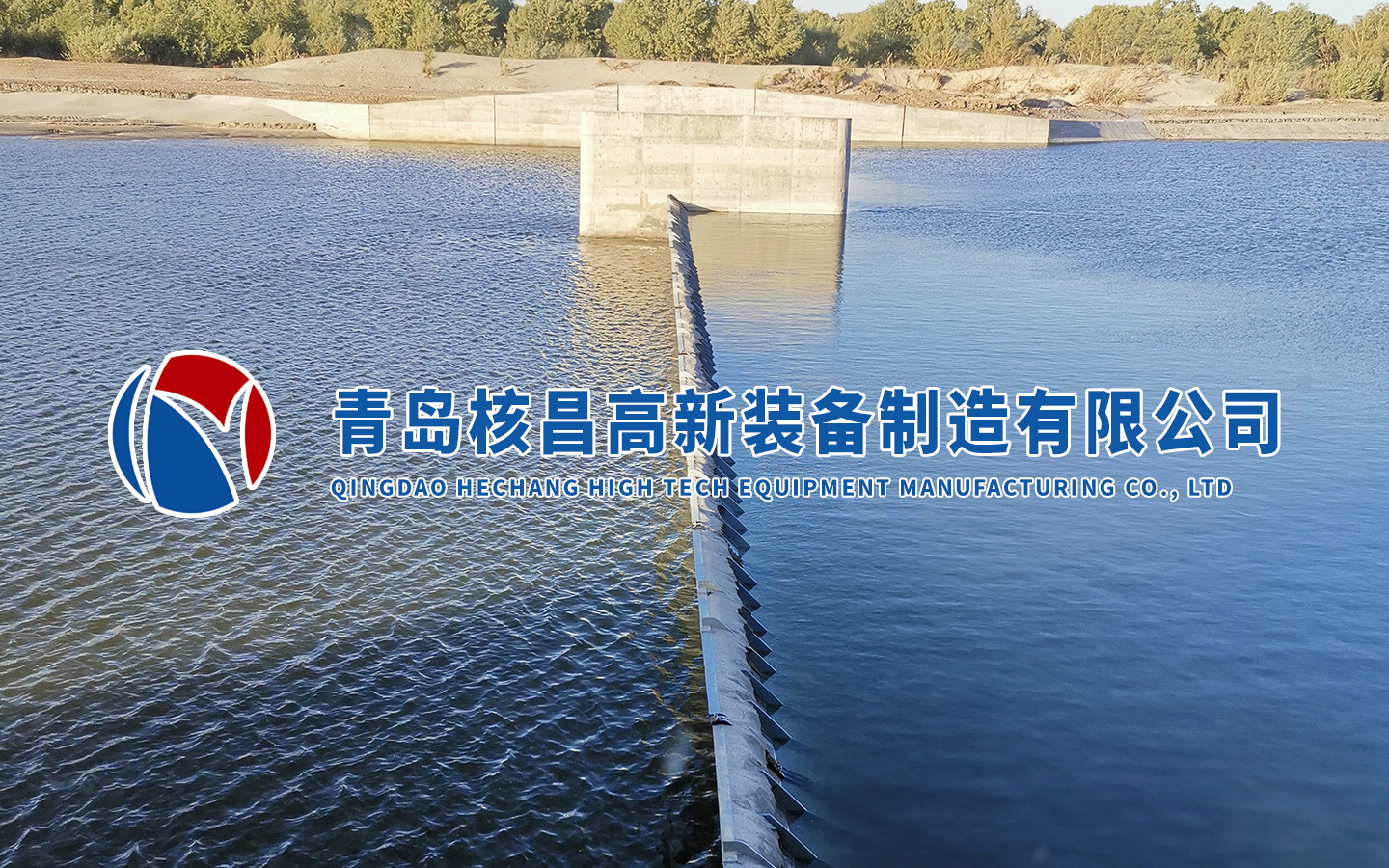
Through a flexible mechanism of "inflating to retain water and deflating to discharge floods", short-term floods during the flood season are intercepted and stored in the upstream reservoir area. In the dry season, the height of the dam is accurately adjusted to release water stably according to the water demand patterns of wetlands and vegetation, providing the Gobi Desert with "retainable and deployable" ecological water.
-
• Ecologically Friendly to Protect Fragile Ecosystems
When the shield dam collapses, it lies flat on the riverbed (with extremely low water-blocking height), without hindering groundwater exchange or biological migration. When retaining water, it forms a continuous water surface, creating a habitat for wetland plants and amphibians, while nourishing riparian vegetation and facilitating the reconstruction of the ecological chain.
-
• Strong Weather Resistance to Adapt to Gobi Conditions
Special materials and structural designs that resist wind erosion and temperature variations are adopted, enabling the dam to withstand intense sunlight, sandstorms, and large day-night temperature differences in the Gobi. It operates stably and reliably for a long time, reducing the difficulty of operation and maintenance.
III. Ecological Transformation: A "Green Comeback" from Desert to Wetland
Since the shield rubber dam was put into use, significant changes have occurred in the project area:
-
• Wetland Recovery
The upstream reservoir stores water stably, leading to the gradual restoration of shrinking natural wetlands. The water area has expanded by more than 30%, and the formed open water surface has become a habitat for waterfowl and insects. Additionally, evaporation increases air humidity, alleviating the arid climate of the Gobi.
-
• Vegetation Renewal
Stable water supply has increased the survival rate of drought-tolerant vegetation such as Haloxylon ammodendron (saxaul) and Tamarix ramosissima (salt cedar) to over 85%. The once bare Gobi is gradually covered with greenery, and wind erosion has been effectively curbed.
-
• Ecological Chain Activation
The restoration of water sources and vegetation has attracted the return of small animals such as hares and gerbils, significantly increasing biodiversity. The Gobi has regained its vitality with "abundant water, lush grass, and thriving creatures".
From solving the pain point of water scarcity in the Gobi, to the precise empowerment of shield rubber dam technology, and then to the comprehensive recovery of wetlands and vegetation, Qingdao Hechang's shield rubber dam has opened up an efficient path for ecological restoration in the Gobi Desert of Xinjiang, and also provided a replicable model for "revitalizing ecology with water" in arid regions.

 137 9199 0091