

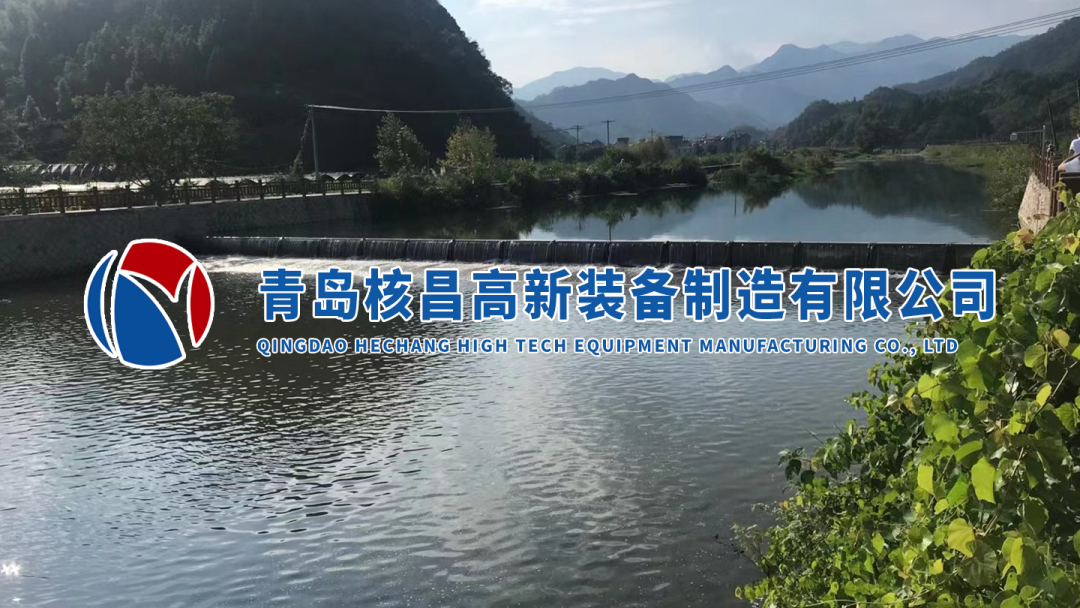
I. Industry Background and Technical Iteration of Reconstruction Projects In the field of water conservancy engineering, traditional rubber dams are generally plagued by problems such as dam body damage and anchoring failure due to long-term exposure to water scouring, ultraviolet aging, and freeze-thaw cycles. Statistics show that rubber dams that have been in service for more than 10 years require frequent maintenance, with annual maintenance costs accounting for 15%-20% of their construction cost. As the third-generation water-retaining structure in water conservancy, the air-shield dam achieves water retention by using inflatable airbags to support arc-shaped shield plates, with its core advantages as follows: - Improved durability: The airbags are made of EPDM rubber composite fiber material, with an anti-aging service life of more than 30 years, which is twice that of rubber dams. - Intelligent operation: The dam height can be adjusted by remotely controlling the inflation volume through the PLC system, with a response time of ≤30 minutes. - Flood resistance and safety: The impact strength of the shield plate structure reaches 3.5MPa, far exceeding the 1.2MPa of rubber dams. The reconstruction project of Qingdao Hechang High-tech Equipment Manufacturing Co., Ltd. is based on the current situation of anchoring槽 leakage and partial tearing of the rubber dam in a certain river basin, aiming to improve the safety and economy of the water conservancy hub through technical upgrading. II. Core Project Overview and Technical Parameters a. Reconstruction scope: On the basis of the original concrete foundation of the rubber dam, the old dam body and anchoring system will be demolished and reconstructed into a single-span 12m × 5m high pneumatic shield gate dam. b. Key parameters: - Width of foundation slab: 8.5m, and the depth of the original anchoring槽 needs to be checked (design requirement ≥300mm); - Shield plate radian: R=4.2m, and the working pressure range of the airbag is 0.08-0.12MPa; - Anchoring system: The main bolts are M36×1200mm high-strength bolts with a tensile strength of ≥800MPa.
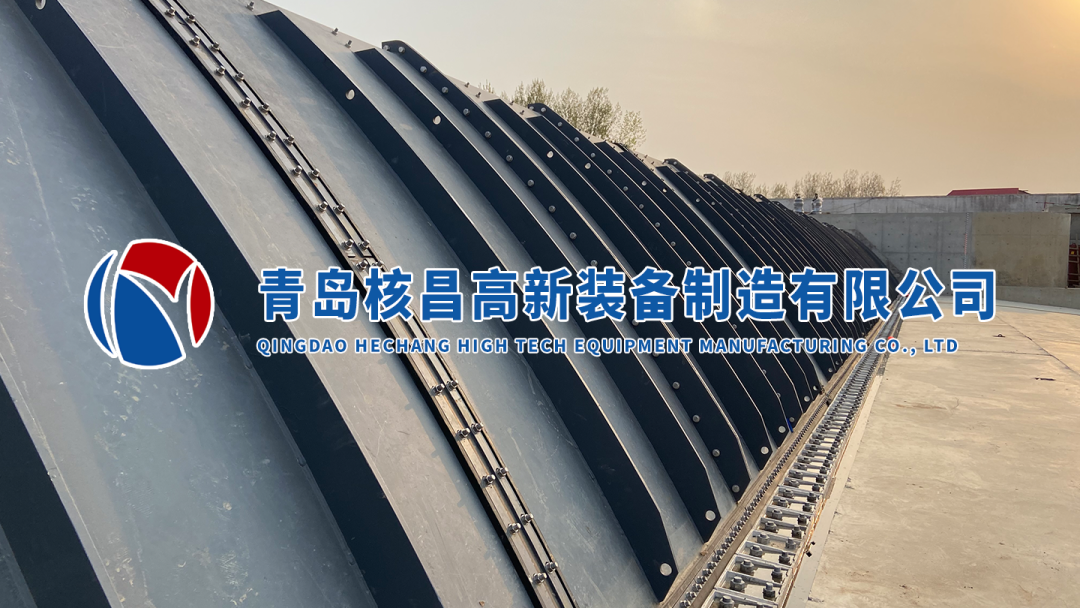
III. Overall Construction Logic and Phased Division a. Preliminary Preprocessing Stage Three steps for foundation cleaning: - Mechanically break the wedge blocks of the original anchoring槽, and manually remove residual concrete fragments; - Rinse the foundation surface with a high-pressure water gun, and use a water pump to drain the accumulated water to ensure that the moisture content of the base surface is less than 5%; - Use a grinder to level the damaged base surface, with the flatness error controlled within ±5mm. Surveying and setting-out system: - Use a total station to check the length of a single-span dam (allowable deviation ±10mm), measure the foundation levelness with a level (height difference within every 2m range ≤3mm), and finally set out the center line of the main anchoring bolts, with the setting-out accuracy required to reach ±2mm. Rebar planting and slotting engineering: - Before drilling, use a rebar detector to locate the original foundation rebars, with a 100% avoidance rate; after rebar planting, extract 3% of the bolts for pull-out tests, with the designed pull-out force ≥60kN; the slotting depth of the high-pressure hose槽 shall reach 150mm, and the internal edges and corners of the slot shall be ground to R≥5mm. Equipment installation process: - The installation of airbags and shield plates must follow the four steps of "setting out - positioning - anchoring - pressure testing". The inflation pressure testing is carried out in three stages (detailed later), with each stage maintaining pressure for 30 minutes to detect tightness. b. Core Stage of Structural Construction Rebar planting and slotting engineering: - Before drilling, use a rebar detector to locate the original foundation rebars, with a 100% avoidance rate; after rebar planting, extract 3% of the bolts for pull-out tests, with the designed pull-out force ≥60kN; the slotting depth of the high-pressure hose槽 shall reach 150mm, and the internal edges and corners of the slot shall be ground to R≥5mm. Equipment installation process: - The installation of airbags and shield plates must follow the four steps of "setting out - positioning - anchoring - pressure testing". The inflation pressure testing is carried out in three stages (detailed later), with each stage maintaining pressure for 30 minutes to detect tightness. c. System Commissioning and Acceptance Stage The linkage commissioning of electromechanical equipment needs to simulate flood conditions, and the lifting time of the dam height from 0 to 5m shall be ≤8 minutes (tested under the pressure of 0.08-0.12MPa); The flood control and flood season acceptance must pass the simulation of flood conditions with a 10-year recurrence interval, ensuring that the dam displacement is ≤10mm. IV. Technical Breakthroughs of the Reconstruction Project Compared with the traditional newly-built air-shield dam, the difficulty of this reconstruction project lies in the "utilization of the old foundation": the new anchoring system is connected with the original concrete foundation through rebar planting technology. Verified by finite element analysis, the shear strength of the joint surface between the new and old structures reaches 2.8MPa, meeting the design requirements. The pressure range of 0.08-0.12MPa is verified by finite element analysis, and the anti-overturning safety factor K of the shield plate is ≥1.5, meeting the requirements of the SL227-98 specification. This "reconstruction instead of new construction" mode saves 35% of the cost compared with the new construction project and shortens the construction period by 40%.