Analysis of the Working Principle and Water Retention and Flood Discharge Mechanism of the Shield Rubber Dam
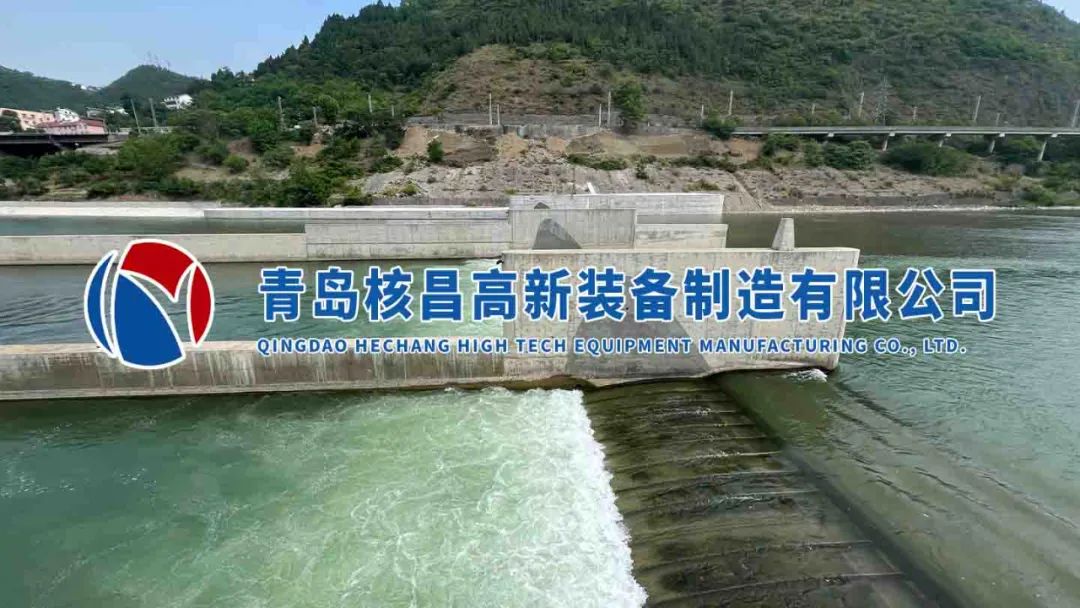
As a new type of flexible water-retaining structure in the field of water conservancy engineering, the air shield dam is widely used in reservoirs, river courses, irrigation and flood control projects due to its advantages of simple structure, convenient construction and strong adaptability. Its core working logic revolves around air pressure regulation, and the functions of water retaining and flood discharge can be flexibly realized by changing the air pressure state in the airbag. This article will systematically analyze the structure, working principle of the air shield dam, as well as the specific realization process of water retaining and flood discharge.
The design of the air shield dam centers on the core logic of "airbag + air pressure control", supplemented by supporting structures and auxiliary facilities, forming a complete water-retaining system:
The airbag is made of high-strength rubber or composite materials, which has both flexibility (to adapt to deformation) and airtightness (to prevent leakage). Its shape is usually designed as a long strip, laid along the length of the dam, with both ends firmly fixed on the dam foundation. It serves as a "flexible barrier" for realizing the water-retaining function.
This system integrates equipment such as air compressors, pressure sensors, and control valves, and is responsible for accurately adjusting the air pressure in the airbag:
-
When inflating, it pushes the airbag to expand, constructing a water-retaining structure;
-
When deflating, it guides the airbag to contract, realizing flood discharge.
Through real-time monitoring and dynamic regulation, it ensures that the state of the airbag adapts to changes in water level.
-
Dam foundation: As a supporting structure, it is constructed of concrete or steel, responsible for fixing the airbag and bearing water pressure;
-
Dam body: Composed of the airbag and the dam foundation, it forms the main structure for retaining water, with both flexible deformation capacity and rigid support.
They include a drainage system (to ensure smooth water flow around the dam body) and a safety monitoring system (to monitor the dam body's stress, water level and other states in real time), providing guarantees for the stable operation of the air shield dam.
The core functions of the air shield dam - water retaining and flood discharge - are completely realized through the "expansion-contraction" cycle of the airbag, with a controllable and flexible process:
-
Airbag inflation: When water retaining is needed, the air pressure control system injects compressed air into the airbag. As the air pressure rises, the airbag gradually expands, forming a continuous water-retaining structure in cooperation with the dam foundation;
-
Barrier formation: The top of the expanded airbag comes into contact with the water surface, and by virtue of its flexibility (adapting to changes in water level) and airtightness (preventing leakage), it constructs a water-retaining barrier;
-
Stable maintenance: During the water retaining period, the air pressure control system continuously monitors the air pressure in the airbag and automatically adjusts the inflation amount according to the water level to ensure the stability of the barrier (for example, when the water level rises, air pressure is supplemented to prevent the airbag from deforming and failing).
-
Airbag deflation: During flood discharge, the air pressure control system gradually releases the compressed air in the airbag. As the air pressure decreases, the airbag gradually contracts, and the water-retaining barrier gradually disappears;
-
Water flow passage: After the airbag contracts, water can flow freely through the dam body to realize flood discharge. Since the deflation process is controllable (such as adjusting the valve opening), the flood discharge flow can be accurately regulated according to needs, avoiding "flood disasters caused by too fast flood discharge" or "waste of water resources due to too slow flood discharge";
-
Restoring water retaining: After flood discharge is completed, the airbag can be expanded by re-inflation, quickly restoring the water-retaining state.
Compared with traditional water-retaining structures (such as concrete dams and rubber dams), the air shield dam has significant advantages:

With the above advantages, the air shield dam has been applied in various water conservancy projects:
-
Reservoir dams: Regulating reservoir water levels, discharging floods in flood seasons and retaining water in dry seasons to ensure the safe operation of reservoirs;
-
River regulation: Blocking river water flow, regulating the flood discharge rhythm, preventing river flooding, and protecting the safety of villages and towns along the banks;
-
Irrigation projects: Precisely controlling the water retaining and flood discharge of irrigation channels, flexibly adjusting the irrigation flow to match the water demand law of farmland;
-
Flood control projects: Serving as a "flexible barrier" in flood control dikes, assisting in blocking floods and discharging floods in an orderly manner, improving the flood control capacity of urban and rural areas.
With the increasing demand for "intelligence, high efficiency and multi-functionality" in water conservancy projects, the technological iteration of the air shield dam focuses on three directions:
-
Material innovation: Developing airbag materials with higher strength, aging resistance and tear resistance (such as new composite rubber) to extend the service life and enhance safety under extreme working conditions;
-
Intelligent control upgrade: Introducing the Internet of Things and big data technologies to realize automatic regulation of airbag air pressure (such as adjusting flood discharge preparations in advance according to weather forecasts), improving the accuracy and efficiency of water retaining and flood discharge;
-
Multi-functional integration: Integrating with facilities such as hydropower generation, ecological water supplement and water quality monitoring to create an integrated water conservancy system of "water retaining + flood discharge + multi-purpose", improving the comprehensive benefits of the project.
The air shield dam, with air pressure control as its core principle, cleverly realizes the functions of water retaining and flood discharge through the "expansion-contraction" cycle of the airbag. It has multiple advantages such as structural, adaptability, environmental protection and safety, and is widely used in water conservancy projects. With the breakthroughs in materials, control and integration technologies, the air shield dam will provide stronger support for the rational utilization of water resources and water safety guarantee, and play an increasingly important role in future water conservancy construction.