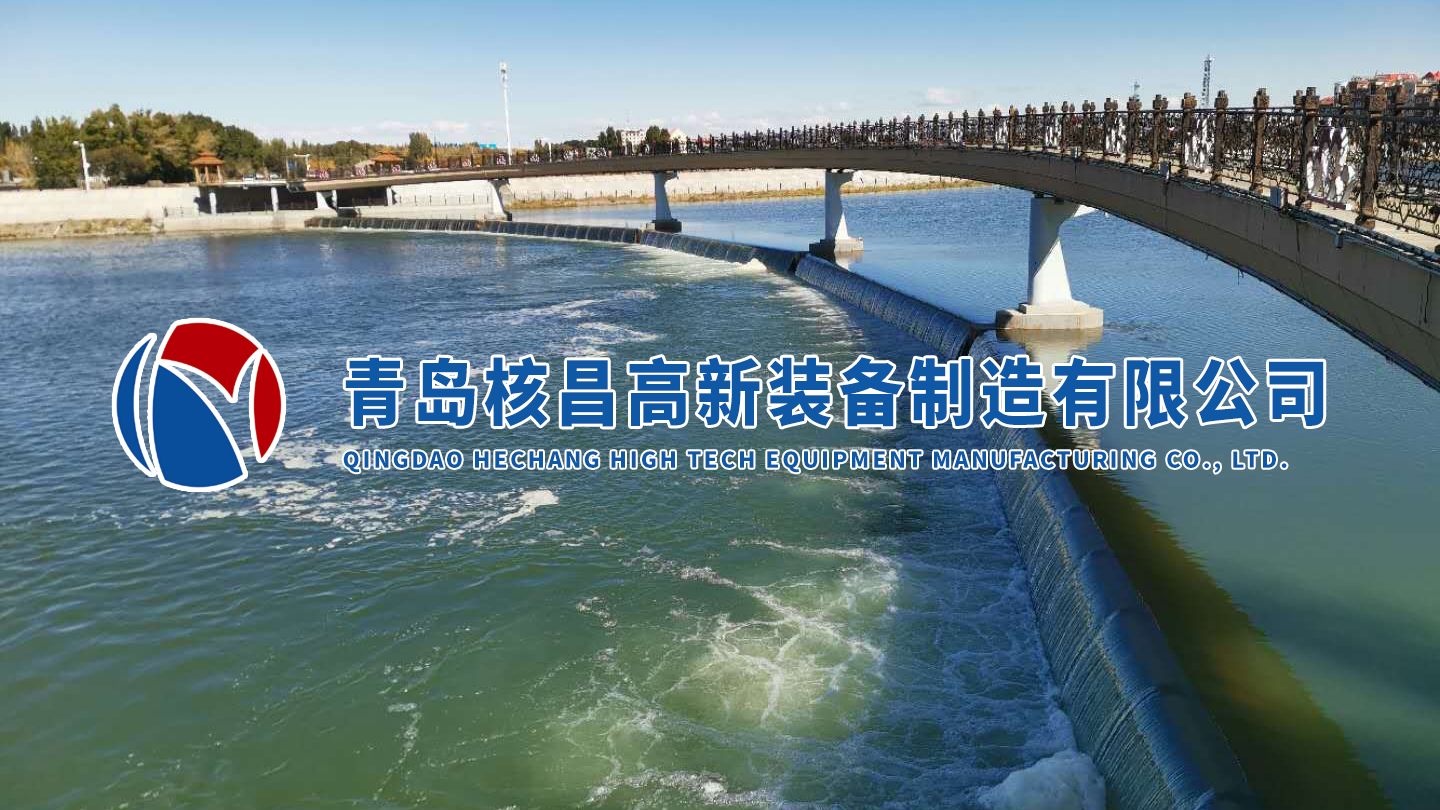
 In the field of river regulation and water conservancy projects, the Shield Rubber Dam stands out with its unique charm of modern technology and has emerged as an innovative successor to traditional sluice gates and Rubber Dams. Its core appeal lies in an elaborate operating principle that perfectly integrates rigidity and flexibility, mechanics and intelligent control. Understanding this principle allows one to grasp why it is hailed as the "intelligent shield" in water conservancy engineering.
I. Core Composition: A Synergistic Pair of "Shield" and "Air"
True to its name, the physical structure of the Shield Rubber Dam centers on two core components. These components perform their respective functions while interacting deeply, jointly supporting the dam’s key operational capabilities:
1.1 Steel Shield: The "Rigid Backbone" Against Water Flow
As the dam’s "frontline performer" standing in water, it is formed by joining multiple curved alloy steel plates side by side, boasting strong impact resistance:
-
• Directly bears water pressure and undertakes the core task of water retention;
-
• Can withstand water erosion, the impact of floating debris, and even damage to the dam caused by low-temperature freezing in winter.
1.2 Flexible Power: The "Invisible Muscles" Driving the Dam
Hidden beneath the steel shield is the power and control core of the entire system, consisting of three parts:
-
• High-tech rubber bladder: Laid along the dam base, it serves as the "flexible actuator" for lifting and lowering the shield;
-
• Automatic inflation and deflation control system: Acting as the "neural center," it is responsible for receiving commands and adjusting pressure;
-
• Air compressor: Connected to the bladder via pipelines, it supplies compressed air to the system and acts as the source of power output.
II. Operation Process: A "Rigidity-Flexibility Symphony" in Closed-Loop Operation
The Shield Rubber Dam follows clear logic for lifting, lowering, and operation. The entire process can be broken down into three consecutive steps to achieve precise regulation of water flow:
2.1 Precise Water Retention (Raising): Air Bladder Generates Force, Shield Stands Upright
When water storage or raising the upstream water level is required, the system initiates the dam-raising procedure:
-
1. The automatic control system sends a command, and the air compressor starts working to fill the rubber bladder with compressed air;
-
2. The bladder expands evenly, and like a "flexible air arm," it lifts the curved steel shield above smoothly to the designed height;
-
3. The entire process is noise-free and fast, and the dam-raising angle can be precisely adjusted via pressure, quickly forming a water-retaining barrier.
2.2 Stable Maintenance (Water-Retention State): Flexible Support to Buffer Impacts
After the steel shield reaches the specified position, the system switches to pressure-maintaining mode, and the bladder maintains a constant pressure to support the shield:
-
• Unlike purely rigid structures, the flexible nature of the bladder allows the shield to tilt backward slightly and adaptively when encountering impacts;
-
• It can cleverly dissipate the peak pressure from extreme floods or foreign object collisions, significantly reducing the risk of dam damage and enhancing the structure’s safety and service life.
2.3 Smooth Flood Discharge (Lowering): Deflate and Contract, Shield Returns to Its Original Position
When flood discharge, lowering the water level, or restoring the natural flow of the river is needed, the dam-lowering operation is simple and efficient:
-
1. The control system opens the exhaust valve, and the compressed air in the bladder is discharged quickly and in an orderly manner;
-
2. As the bladder contracts gradually, the steel shield lies slowly on the base at the bottom of the riverbed under the combined action of its own gravity and upstream water pressure;
-
3. Finally, the dam fits perfectly with the riverbed, forming a nearly zero-resistance flow section, which ensures the smooth passage of floods and drift ice without affecting the river’s flood discharge and ecological circulation.
III. Source of Advantages: The Underlying Logic of "Rigid Water Retention, Flexible Drive"
The many outstanding characteristics of the Shield Rubber Dam all stem from the core principle of "rigid water retention, flexible drive," which gives it significant advantages over traditional water conservancy equipment:
-
• Compared with Rubber Dams: With steel shields as the water-retaining surface, it avoids the problem that Rubber Dams are easily punctured or torn by sharp objects, resulting in a longer service life and lower maintenance costs;
-
• Compared with traditional steel sluice gates: It eliminates the need for complex components such as underwater hinges and large hoists, featuring a simpler structure, lower energy consumption for lifting and lowering, and higher operational flexibility;
-
• Flood control and ecological balance: Its ability to lift and lower quickly can respond to sudden flood situations, and the zero-resistance flow section design during flood discharge balances flood control safety and the river’s ecological circulation.
IV. Conclusion: The "Silent Balancing Act" of Modern Water Conservancy
The mystery of the Shield Rubber Dam’s operation essentially lies in an exquisite balance between "flexibility and rigidity"—using the lightest air power to drive the strongest steel shield. Through the switching between "raising and lowering" and "retaining and discharging," it achieves precise, intelligent, and eco-friendly management of water flow.
This "waterborne balancing act" that operates silently not only breaks through the limitations of traditional water conservancy equipment but also embodies the core wisdom of modern water conservancy engineering: "efficiency, safety, and ecology."