

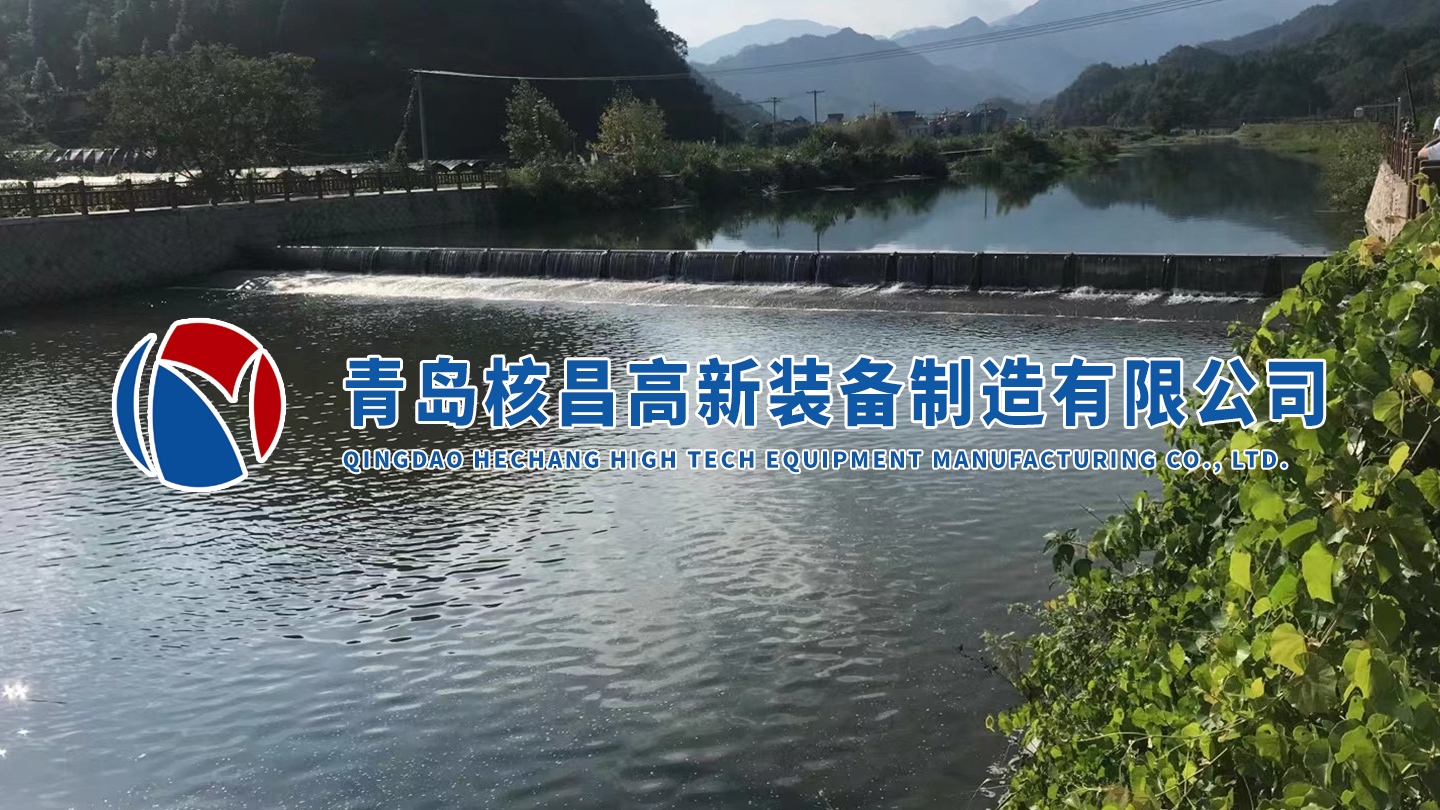
 The Shield Rubber Dam is a new composite water-retaining structure that integrates the flexible water-blocking advantages of rubber dams and the rigid stability characteristics of steel gates. Featuring a simple structure, flexible opening and closing, and strong adaptability, it is widely used in water conservancy projects such as river water storage, ecological management, and landscape improvement. Its ultimate dam height is not a fixed value, but a technical critical value restricted by multiple factors including airbag material performance, anchorage system reliability, overall structural design, and construction technology. Combining engineering practice and technical research, this paper conducts an in-depth analysis of the height limit, safety factor and core constraint conditions of Shield Rubber Dams.
In terms of mature completed projects in China, the conventional applied height of Shield Rubber Dams is concentrated in the range of 2 to 4 meters, which meets the water retaining and regulation demands of most small and medium-sized rivers. Among them, a river regulation project in Tianshui adopts a 2.0-meter-high Shield Rubber Dam to adapt to the water storage and landscape functions of urban small rivers; the Weihe River water conservancy project in Xianyang adopts a 4.0-meter-high Shield Rubber Dam, which balances the dual working conditions of flood discharge and water storage with good operational stability.
In the field of ultra-high dam application, the highest operational Shield Rubber Dam in the world is currently located at the Nanming River in Guiyang, with an actual operating height of 6 meters, setting a new record for the application height of conventional Shield Rubber Dams. With the iterative upgrading of water conservancy equipment technology, professional domestic manufacturers have completed the research, development and experimental verification of ultra-high Shield Rubber Dams, raising the engineered design dam height to 10 meters. A full-scale simulation test channel for 8 to 10-meter-high dams has been built to verify the operational reliability of ultra-high dam bodies by simulating real water head and load working conditions.
Based on the current technical reserves, test data and engineering implementation capabilities, 10 meters can be defined as the upper limit height for large-scale engineering application of Shield Rubber Dams. Exceeding this height will cause systematic working condition changes in airbag pressure bearing performance, shield plate structural stiffness and anchorage system stability. Conventional design parameters and process standards cannot adapt to the stress demands under ultra-high water head, resulting in a significant increase in engineering safety risks.
The overall safety redundancy of Shield Rubber Dams mainly relies on two core components: the airbag pressure-bearing structure and the dam anchorage system. Its safety factor is far superior to that of traditional rubber dams, with stronger working condition adaptability and risk resistance.
In terms of airbag working performance, the normal operating pressure of conventional Shield Rubber Dam airbags is stably maintained at 0.7 to 0.8 MPa. Optimized with high-strength rubber composite materials and multi-layer vulcanization technology, its design safety factor reaches 15 times that of traditional rubber dams, with greatly improved wear resistance, aging resistance and impact resistance. However, this safety advantage is based on a core premise: the airbag is free from damage, aging cracks and maintains good air tightness. Once local damage occurs to the airbag, the overall pressure-bearing safety redundancy will decline rapidly.
In terms of overall structural stability, water conservancy engineering specifications have clear mandatory standards for the anti-slip stability safety factor of Shield Rubber Dams: under conventional basic load working conditions, the anti-slip stability safety factor of the dam body shall be greater than 1.25; under special complex working conditions such as earthquakes, the safety factor shall not be lower than 1.15. To ensure long-term operational safety and resist extreme hydrological working conditions, additional safety margins are generally reserved in actual engineering design and construction to further improve the stability of dam operation.
From the perspective of underlying technical logic, the core bottleneck restricting the increase of Shield Rubber Dam height is not the insufficient pressure-bearing capacity of a single airbag, but the comprehensive reliability shortcomings of supporting systems under ultra-high water head working conditions. The key factors restricting dam height improvement fall into two major dimensions. First, the long-term operational reliability of the anchorage system: ultra-high water head exerts continuous and high-strength shear and tensile loads on the dam anchorage structure, which is prone to anchorage relaxation, corrosion and bearing capacity attenuation under long-term cyclic working conditions, serving as the main failure risk point of ultra-high Shield Rubber Dams. Second, the manufacturing and vulcanization technology of large-size airbags: the large-span airbags matched with ultra-high dams require extremely high material uniformity, vulcanization fitting accuracy and overall air tightness. Process defects easily cause uneven local stress, leading to airbag deformation, air leakage and other faults.
Meanwhile, engineering practice shows that when the dam height exceeds 6 meters, the cooperative stress state between the rigid shield plate structure and the flexible airbag structure becomes extremely sensitive. Minor structural deviations, material defects or uneven stress can trigger local stress concentration, cause partial damage, and eventually induce cascading failure of the dam body, greatly increasing engineering operational risks.
In conclusion, the ultimate dam height of a Shield Rubber Dam is essentially the intersection critical value of the safety margins of airbag material performance, anchorage system bearing capacity, and manufacturing and construction technology. The breakthrough of the dam height upper limit requires the synchronous iterative upgrading of technology, craftsmanship and standards in the three core links.