

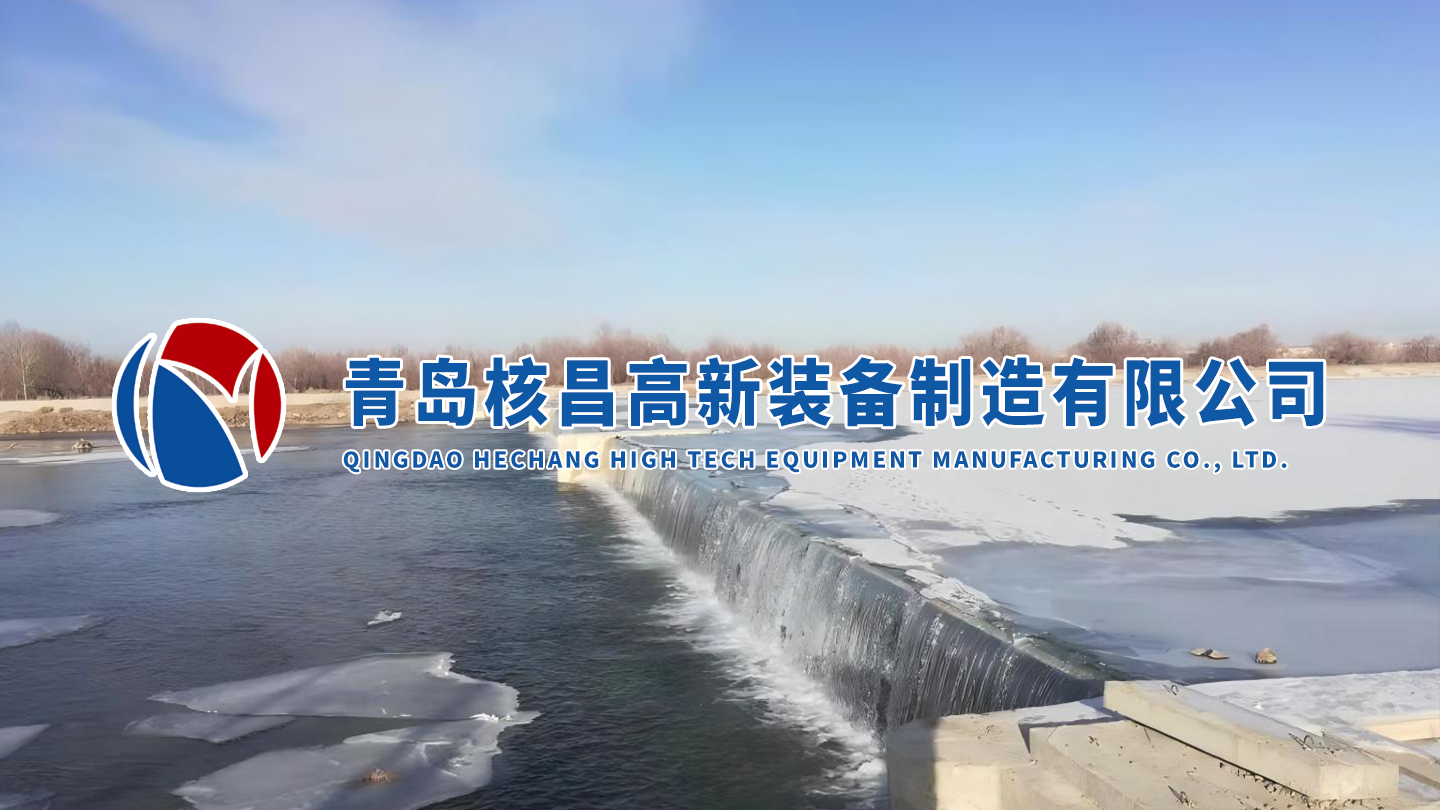
 At -30°C, water freezes instantly. Under such harsh conditions, the Shield Rubber Dam can still rise and fall smoothly. Instead of simply withstanding severe cold by brute force, it adopts a complete anti-freezing protection system: preventing water from freezing, avoiding ice jamming of the dam structure, and stopping pipeline blockage by ice, with multi-layer and coordinated protection.
Moisture in compressed air is the primary cause of ice blockage in pneumatic pipelines. A combined refrigerated and adsorption dryer unit is installed at the air source to lower the dew point of compressed air below -40°C and remove moisture before ice crystals form. In addition, air supply pipelines are wrapped with electric tracing tapes and insulation layers. Temperature sensors enable automatic temperature control to keep pipelines above the freezing point and ensure unobstructed air charging and discharging passages.
The biggest operational risk is the ice cover freezing and sticking to the shield plate. Forced lifting may tear the air bag. The control system adopts a micro-movement ice-breaking strategy: the air bag pressure is adjusted in stages to drive the shield plate to make small reciprocating movements. Relying on the rigidity of the steel shield plate, cracks are generated in the ice layer to release ice pressure in advance. Combined with underwater aeration and water flow disturbance in front of the dam, large-area adhesion between the ice cover and the dam surface is avoided.
The outer layer of the air bag is made of EPDM rubber compounded with polyurethane insulation material. It maintains good elasticity at -40°C without hardening or cracking. Flexible connections are adopted between the shield plate and the foundation to adapt to uneven settlement caused by freeze-thaw cycles and prevent stress fracture of rigid structures.
Key electromechanical equipment such as valves and control cabinets are placed in thermal insulation cabins, providing a stable working environment for electrical components. It ensures normal execution of control commands under extreme cold conditions and guarantees the reliability of the control link.
Dry air source, electric heat tracing, micro-movement ice breaking and low-temperature resistant structural materials complement each other and are all indispensable. The normal lifting operation of the Shield Rubber Dam at -30°C relies on a multi-layer coordinated protection system rather than passive resistance of a single structure.