

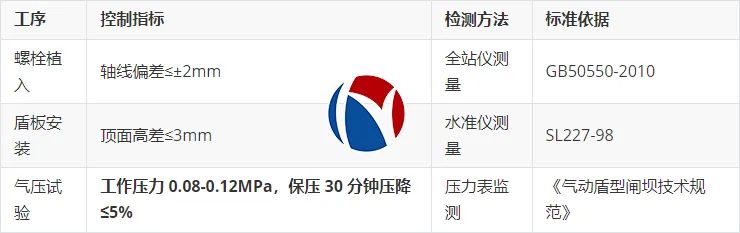
I. Innovation in Construction Technology and Efficiency Improvement Upgrading of Survey Control Technology Leica TS60 total station (angle measurement accuracy 0.5″, distance measurement accuracy 1mm + 1ppm); Trimble DINI03 level (accuracy 0.3mm/km). All instruments must pass the verification by provincial metrology institutes. BIM technology is adopted to establish a foundation model, and design drawings are compared with on-site measured data to identify dimensional deviations in advance; Configuration of surveying instruments: Optimization Measures for Concrete Construction C40 concrete for foundation repair is added with an expanding agent (admixture ratio 8%) to reduce shrinkage cracks; Temperature control during pouring: In summer, ice water is used for mixing (pouring temperature ≤ 28℃); in winter, hot water is used for mixing (water temperature ≤ 80℃) to ensure the pouring temperature ≥ 5℃; Curing process: Cover with geotextile and sprinkle water for curing, with a curing period of 14 days. When the daily average temperature is < 5℃, electric heating wires are used for heat preservation. II. Cost Control and Process Optimization Measures to Improve Material Management Efficiency Components such as bolts are prepared according to the drawing ratio of 1:1.05, and surplus materials can be remade into small embedded parts; Phenolic plywood is used for formwork (turnover times ≥ 15), saving 40% of cost compared with ordinary wooden formwork; Concrete fragments generated from pipeline groove cutting are crushed and used as subgrade filler, with a utilization rate of 80%. Optimization of Process Connection Adopt the flow operation of "rebar planting - pipeline embedding - concrete leveling", with the interval between each process controlled within 24 hours; When electromechanical equipment installation and civil construction are carried out in cross-operation, a 3-day buffer period is set to avoid process conflicts; Implement the "daily plan - weekly assessment" system. If the delay exceeds 1 day, a work catch-up plan (such as adding work teams) must be formulated. III. Implementation of Standardized Quality Management Implementation Standards of Three-Inspection System Self-inspection: 100% inspection after the team completes the work, and fill in the self-inspection record form; Mutual inspection: Inspect the previous process before the construction of the next process, focusing on bolt spacing and groove size; Special inspection: Quality inspectors conduct sampling inspection at a ratio of 20%, and 100% inspection is required for rebar planting and concealed works. Key Process Control Points
IV. Technical Support for Work Safety On-site Protection Measures Edge operations: 1.2m-high protective railings (with vertical pole spacing ≤ 2m) shall be installed around the foundation, with dense mesh nets hung; High-altitude operations: When installing shield plates, full scaffolding (with a step distance of 1.5m) shall be erected, and the working layer shall be fully paved with scaffold planks; Construction electricity: The TN-S system shall be adopted, and the distribution box shall be equipped with three-level leakage protection (operating current ≤ 30mA, tripping time ≤ 0.1s). Mechanical Safety Management Lifting equipment: A warning zone shall be set within the operating radius of truck cranes, and special personnel (with valid certificates) shall direct during hoisting; Processing machinery: Cutting machines shall be equipped with protective covers; the length of the secondary cable of electric welders shall be ≤ 30m, and the grounding resistance shall be ≤ 4Ω; Regular maintenance: Lubrication and fastening inspections of equipment shall be carried out weekly, and maintenance records shall be established.