

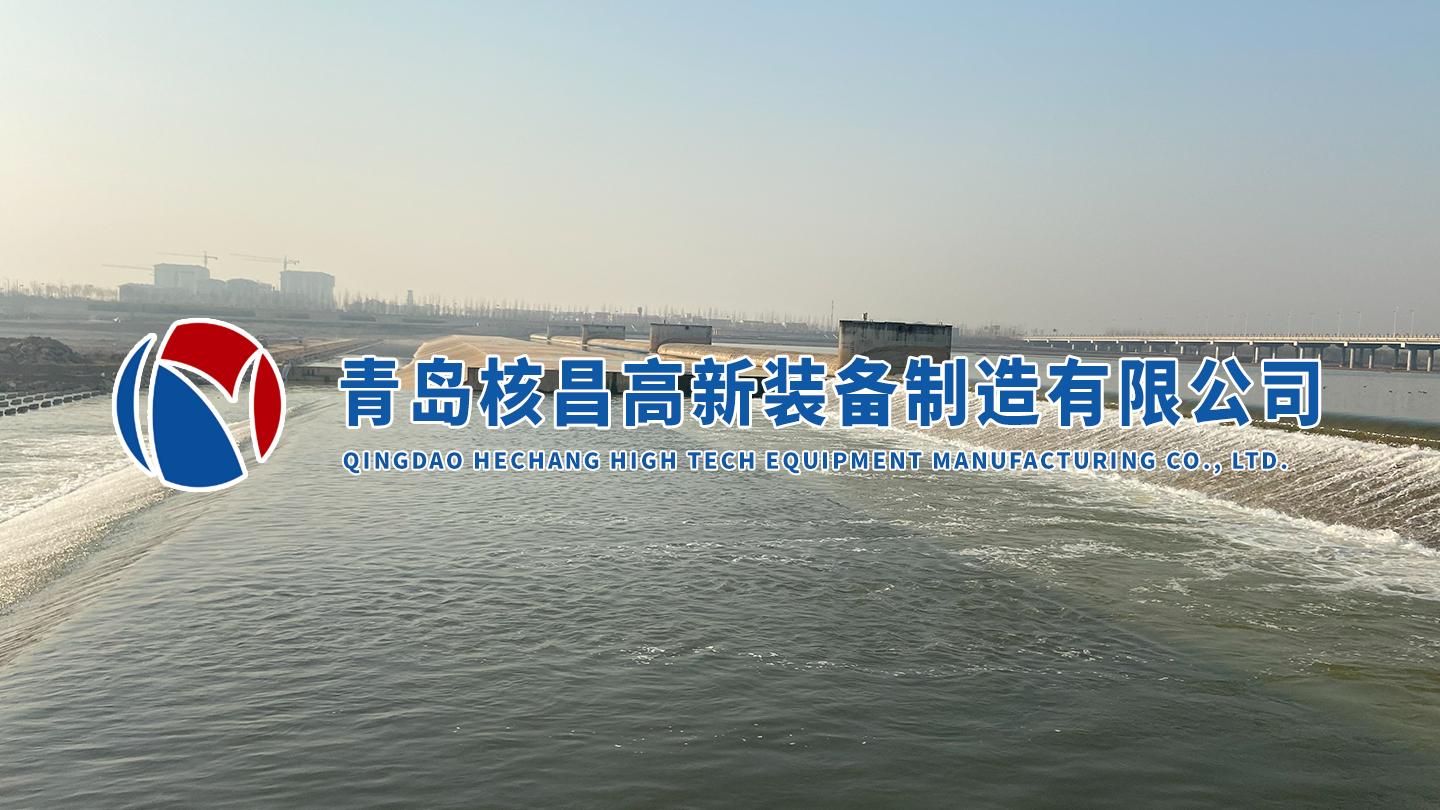
Analysis of the Design Principle of Rubber Dam The design principle of rubber dam is mainly based on the hollow principle. It realizes water retaining and water level adjustment by filling and draining liquid or gas, and is widely used in water conservancy projects and other fields. The following is a detailed explanation of its design principle from multiple aspects. 1. Basic Structure and Working Principle In terms of structure, the rubber dam is formed by anchoring rubber cloth on the foundation floor according to the designed length and width dimensions to form a "closed body with length, width and height". At the same time, with the help of the filling and draining system, water or gas is transported into the rubber bag through the pipeline pre-embedded in the concrete floor, and finally a water retaining dam body is formed. The working principle can be summarized as "inflation for water retaining, drainage for flood discharge": - When inflating or filling with water, the rubber expands, the dam body rises, and the effect of storing water and raising the water level is achieved. - When flood discharge is needed, the water or air inside is released, and the height of the dam body is reduced, so as to flexibly adjust the water level. 2. Design Features and Requirements The design of rubber dam has multiple features, and there are corresponding clear engineering requirements: - Adjustable dam height: The height of the dam body can be flexibly adjusted according to needs to adapt to different water level scenarios and improve the adaptability to the water conservancy environment. - Overflow at dam crest: When the water level exceeds the dam crest, the water flow can overflow evenly from the dam crest, which is conducive to "energy dissipation" (reducing the impact of water flow on the dam body and its surroundings). - Force balance: After water filling or inflation, the rubber cloth (force-bearing framework) bears the tension, and the water pressure acting on the dam body is transmitted to the concrete foundation floor through anchor bolts to form a stable balance force, ensuring that the rubber dam bag is firmly fixed and operates stably. - Sensitive to flow pattern: The rubber dam is a flexible thin-film structure, which is sensitive to the flow pattern and prone to problems such as dam bag wear, vibration and flapping. Therefore, when selecting the project site and designing the overall layout, this feature should be fully considered to avoid disordered flow over the dam. 3. Material Selection and Production The dam bag is the core component of the rubber dam, and its material and production process directly affect the performance of the dam body: - Dam bag material: It is made of polymer materials such as synthetic rubber and highly elastic fiber fabric through hot vulcanization process. These materials need to have good water resistance, corrosion resistance, wear resistance and elasticity to adapt to the long-term erosion of the water conservancy environment. - Production requirements: The production of dam bags must strictly follow the design standards, and the dimensions, thickness, strength and other aspects should be accurately controlled. At the same time, the tightness and durability of the dam bag must be ensured to prevent water leakage, air leakage or shortened service life due to insufficient durability. 4. Application and Benefits Rubber dams have a wide range of application scenarios and significant comprehensive benefits: - Wide application: It covers fields such as river regulation, urban flood control, lakes and reservoirs, and coastal engineering, and is an economical and practical water retaining structure. - Significant benefits: It has the advantages of simple structure, material saving, large span, no or few gate piers, no water resistance and no impact on flood discharge. In addition, the construction of rubber dams can also improve the urban water environment and contribute to the construction of ecological civilization. To sum up, the rubber dam takes the "hollow principle" as the core design basis and adjusts the water level by filling and draining water/gas. It has design features such as adjustable dam height, overflow at dam crest and force balance. In terms of material selection and production, it focuses on "tightness and durability". Finally, with its wide application fields and significant comprehensive benefits, it has become a valuable facility in water conservancy projects.