
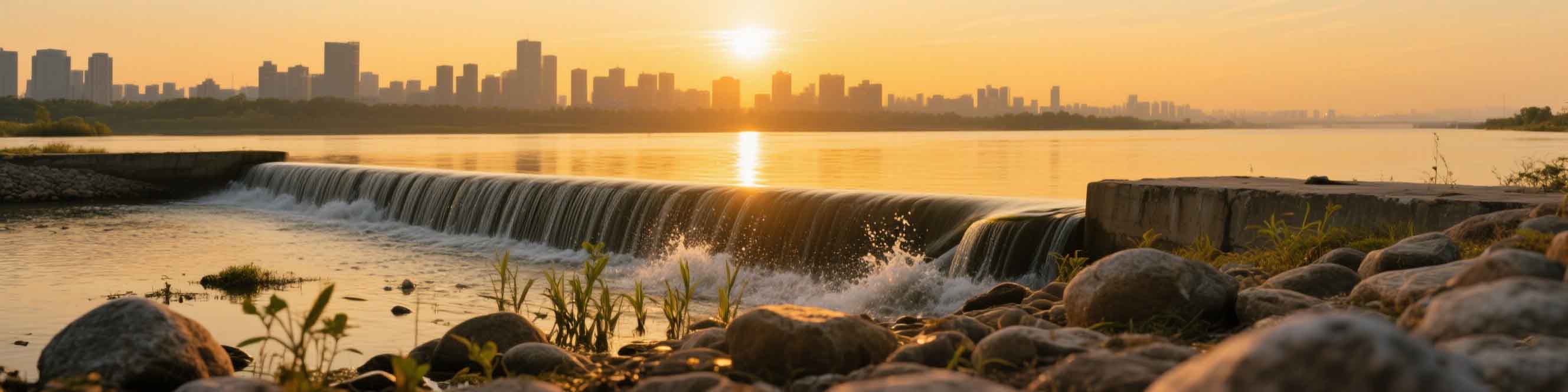
Imagine that before the flood season arrives, an shield rubber dam responsible for the flood control safety of tens of thousands of residents downstream has developed tiny cracks on its core component—the dam bag—due to long-term scouring by water currents and exposure to ultraviolet rays. This not only directly impairs the dam’s water-retaining and regulating capabilities but also acts like a "time bomb," harboring hidden risks to public safety. As the "flexible heart" of the air shield dam, how can aged and damaged dam bags be repaired efficiently? This is not only a key issue in the operation and maintenance of water conservancy projects but also closely tied to the safety of production and daily life for millions of people.
The aging and damage of dam bags result from the long-term combined effect of multiple factors. From the perspective of the external environment:
Ultraviolet (UV) radiation is one of the core triggers. Dam bags exposed to sunlight for extended periods suffer damage to their polymer structures—UV rays break molecular chains, causing the material to gradually harden and become brittle, eventually leading to cracks. For example, outdoor air shield dams may show obvious signs of aging on their dam bags after just 2–3 years of UV exposure.
Extreme temperature changes also accelerate dam bag "aging." In areas with large day-night temperature differences or significant seasonal variations between winter and summer, dam bag materials repeatedly expand and contract due to thermal effects. This constant fatigue of the internal structure eventually results in damage.
Water scouring and abrasion are the "direct drivers" of dam bag damage. During the operation of an shield rubber dam, the dam bag comes into direct contact with water flow. High-speed currents carrying sediment, stones, and other particles exert intense friction and impact on the bag’s surface. Particularly during flood seasons, when water velocity and impact force increase drastically, the dam bag surface is highly prone to scratches and abrasion, and in severe cases, even local tearing. Additionally, internal air pressure fluctuations in the dam bag, friction with the dam structure, and chemical erosion further accelerate the aging and damage process.
Comprehensive and accurate inspection is the foundation before repairing a dam bag.
Air tightness testing is also essential: Inflate the dam bag to a specified pressure and monitor pressure changes. A significant pressure drop in a short period indicates air leakage points that require further location and repair.
The selection of repair materials directly affects repair quality and dam bag lifespan. Currently, dam bags for shield rubber dams are typically made of rubber or fabric-reinforced composite materials. Repairs require materials with performance similar to the original dam bag to ensure compatibility and integrity at the repaired site.
Repair processes are critical for effective repairs:
During repairs, control the uniformity and amount of adhesive to avoid insufficient or excessive application. Strictly regulate environmental conditions (temperature, humidity) to ensure full curing of the adhesive and enhance the strength of the repaired area. For complex damage (e.g., multi-layer fabric damage or internal structural damage), local replacement is used: Cut out the severely damaged section, install a new dam bag component, and connect it to the original bag using professional bonding techniques.
After repair, preventive measures can slow down aging and damage:
The efficient repair of dam bags is a systematic project encompassing aging cause analysis, inspection and evaluation, material selection, process implementation, and preventive measures. It not only revitalizes damaged shield rubber dams but also plays a key role in ensuring flood control safety, stabilizing water resource allocation, and safeguarding aquatic ecological balance. Only by addressing dam bag aging and damage through scientific methods can air shield dams—this flexible water conservancy tool—continuously guarantee the safe operation of water conservancy projects, and build a solid barrier for people’s livelihoods in the "battle" of flood control and water resource utilization.