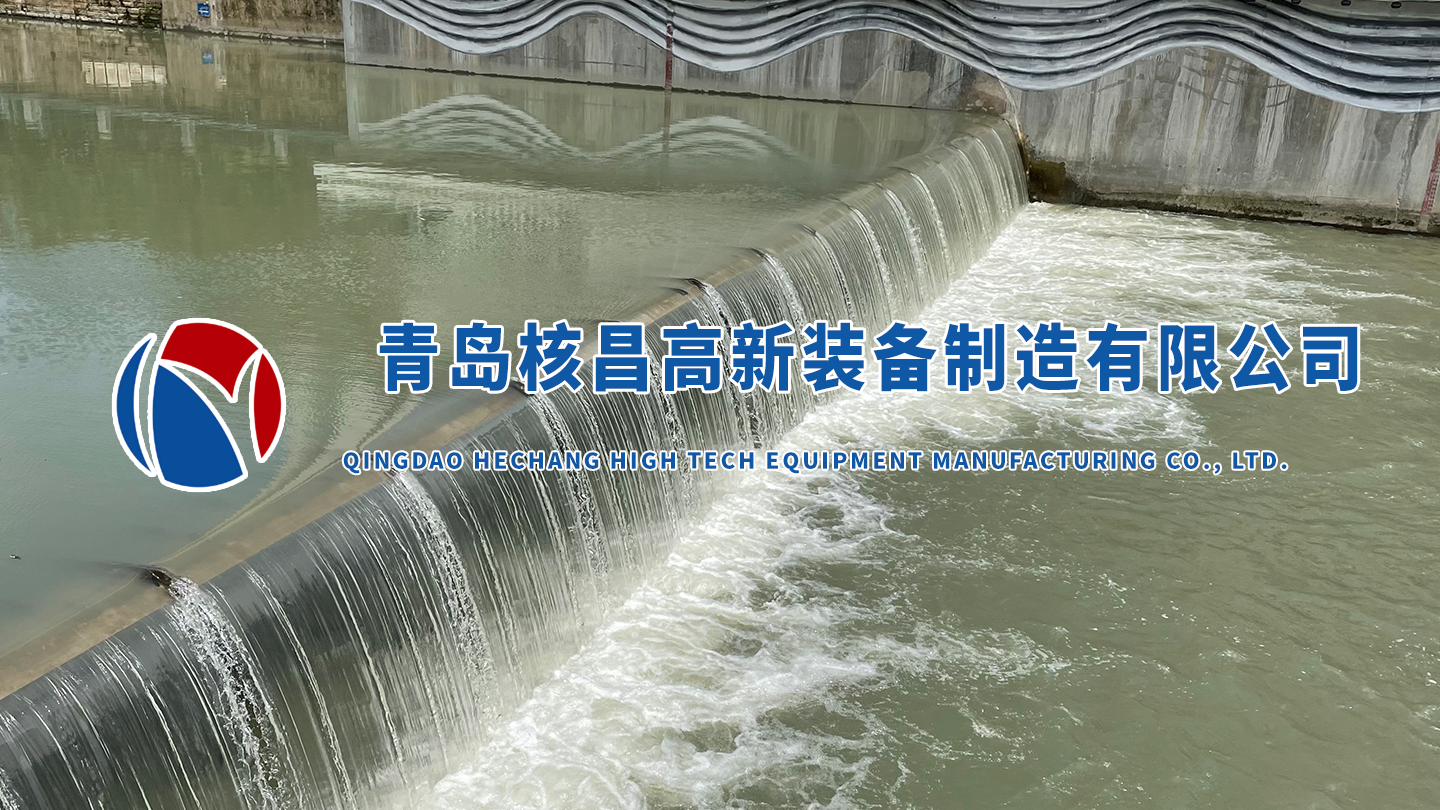
When responding to extreme weather, shield rubber dams demonstrate distinct advantages due to their "flexible regulation + rapid response" characteristics. However, constrained by material properties and structural design, they also have certain limitations under ultra-standard extreme weather conditions and must be adaptively applied based on specific scenarios.
The advantages of shield rubber dams are primarily evident in three scenarios: extreme rainstorms, extreme low temperatures, and severe convection (including short-term strong winds and debris impact), with the core lying in "rapid adjustment" and "structural adaptability".
1. Extreme Rainstorms: Minute-Level Flood Discharge to Reduce Waterlogging Risks
The core threat of extreme rainstorms is sudden rises in river water levels that trigger waterlogging. The "gate-free rapid flood discharge" design of shield rubber dams specifically addresses this issue.
-
• Fast Response Speed: Traditional concrete dams require manual or mechanical gate opening, with the entire flood discharge process taking over 30 minutes. In contrast, shield rubber dams use an intelligent inflation-deflation system to deflate the airbag within 3–5 minutes. The shield plate then lowers to the riverbed, opening a full-section flood discharge channel—improving flood discharge efficiency by 6–10 times.
-
• Strong Anti-Silting Capacity: Rainstorms are often accompanied by sediment and debris scouring. Gates of traditional dams are prone to jamming by debris, which impairs flood discharge. The shield plate of a shield rubber dam has an integral inclined structure without gate gaps, allowing debris to be directly washed away by water flow. Additionally, the water flow velocity during flood discharge is 30% higher than that of traditional dams, enabling automatic silt flushing and preventing river blockage by sediment.
-
• Supporting Case: In 2024, an inland river in Guangzhou was hit by a once-in-a-century rainstorm. The shield rubber dam system in the basin triggered automatic flood discharge 20 minutes in advance, lowering the river water level from 1.2 meters above the warning line to the safe level within 1 hour—preventing waterlogging in coastal residential areas. By contrast, nearby river sections using traditional gate dams experienced local water accumulation due to gate jamming.
2. Extreme Low Temperatures (Below -20°C): Material and Structural Adaptability to Avoid Frost Heave Damage
Extreme low temperatures pose threats of foundation frost heave and component brittleness cracking to traditional dams. shield rubber dams effectively address these issues through material improvement and thermal insulation design.
-
• Low-Temperature-Resistant Materials: The airbag adopts a composite structure of "EPDM rubber + polyurethane insulation layer", which maintains elasticity and avoids hardening or brittleness cracking even at -40°C (traditional rubber dam bags tend to crack at -15°C). The shield plate is made of low-temperature-resistant aluminum alloy, with a yield strength reduction rate of less than 5% at low temperatures to prevent brittle fracture.
-
• Anti-Frost Heave Design: Air-entraining agents are added to the foundation concrete to reduce freeze-thaw damage. An elastic sealing layer is installed at the junction of the airbag and the foundation, which can adapt to minor foundation deformations caused by frost heave (accommodating a maximum settlement of 5mm) and prevent water leakage from cracks.
-
• Operation and Maintenance Guarantee: The inflation-deflation system is equipped with electric heat tracing devices to maintain the pipeline temperature above 5°C and prevent freezing blockage. Regular air replenishment to the airbag is conducted in winter (low temperatures cause a slight drop in air pressure) to ensure dam stability. A shield rubber dam in Yushu, Qinghai (at an altitude of 4,200 meters with a minimum temperature of -35°C), has operated stably for 4 consecutive winters without frost heave damage.
3. Severe Convection (Short-Term Strong Winds, Debris Impact): Combination of Rigidity and Flexibility for Enhanced Damage Resistance
Severe convection weather is often accompanied by short-term strong winds (above Level 8), hailstones, or impacts from debris such as tree branches and rocks. The "shield plate + airbag" structure of shield rubber dams offers better impact resistance than traditional dams.
-
• Impact Protection: The shield plate is made of high-strength aluminum alloy or steel with a thickness of 10–15mm, which can directly resist impacts from hailstones and small rocks (with an impact strength of 15kJ/m², 3 times that of rubber dams) to prevent direct damage to the airbag.
-
• Flexible Buffering: In case of impacts from large debris such as thick tree branches, the airbag can slightly deform to buffer the impact force (with a maximum deformation of up to 20% of its own height), reducing damage to the shield plate and foundation. It can restore its original shape after the impact, whereas traditional concrete dams are prone to cracking when hit by hard objects.
II. Limitations in Responding to Extreme Weather
The limitations ofshield rubber dams mainly stem from "material properties" and "structural height", and risks must be guarded against under ultra-standard extreme weather or special scenarios.
1. Ultra-Standard Extreme Rainstorms: Limited Dam Height Fails to Withstand Extra-High Water Levels
The conventional design height of shield rubber dams ranges from 1 to 5 meters. Beyond 5 meters, the airbag pressure needs to be significantly increased—leading to a sharp rise in costs and reduced safety. If extreme rainstorms cause extra-high water levels exceeding 5 meters, the dam may suffer airbag damage or shield plate deformation due to "excessive jacking pressure".
-
• Risk Scenario: Small and medium-sized rivers hit by ultra-standard rainstorms (once-in-50-years or more) may experience water levels far exceeding the dam’s design height. The water-retaining capacity of shield rubber dams cannot meet demand, requiring coordinated scheduling with upstream reservoirs or flood diversion projects.
-
• Reference Case: In 2023, a county-level river in Henan Province was hit by ultra-standard rainstorms, with water levels exceeding the design height of the shield rubber dam by 0.8 meters. This caused partial damage to 2 airbags; although no major accidents occurred due to emergency flood discharge, subsequent repairs took 1 week.
2. Extreme High Temperatures (Above 35°C): Accelerated Rubber Aging Requires Additional Sun Protection
The core material of the airbag is synthetic rubber. Long-term exposure to temperatures above 35°C and strong ultraviolet (UV) radiation accelerates aging and shortens its service life (from a normal 15–20 years to 10–12 years in extreme high-temperature environments).
-
• Specific Impacts: High temperatures cause the breakage of rubber molecular chains, reducing the airbag’s elasticity and worsening air pressure stability (airbags are prone to "slow air leakage" at high temperatures and require frequent air replenishment). Strong UV radiation accelerates the aging and peeling of the shield plate’s surface coating, increasing the risk of rust.
-
• Limitations in Mitigation: Although installing sunshades or applying anti-UV coatings can alleviate the issue, this increases construction costs (by approximately 10% of the total cost). Additionally, in open rivers or typhoon-prone areas, sunshades are easily damaged by strong winds, limiting their applicability.
3. Extreme Ice and Snow (Heavy Snow, Freezing Rain): Excessive Load from Snow and Ice Accumulation Triggers Structural Deformation
Under extreme ice and snow weather, snow accumulates and freezing rain forms ice layers on the dam surface. The additional load may exceed the bearing capacity of the shield plate and airbag, leading to structural deformation.
-
• Risk Points: A 10cm-thick snow layer imposes a load of approximately 15kg/m², while a 5cm-thick freezing rain ice layer imposes a load of about 50kg/m². The combined load may exceed the shield plate’s design bearing capacity (the upper limit for conventional shield plates is 60kg/m²), causing the shield plate to bend and deform. If ice freezes between the airbag and the shield plate, it impairs the flexibility of inflation and deflation, and may even cause the shield plate to jam.
-
• Difficulties in Mitigation: In plateau or northern regions, manual cleaning of snow and ice is required regularly. However, in the case of continuous heavy snow (e.g., snowfall exceeding 20cm in 24 hours), delayed manual cleaning may still cause structural damage. Moreover, manual cleaning is difficult and inefficient in low-temperature environments.
4. Extreme Power Outages: Failure of Intelligent Regulation, Dependence on Backup Power
The inflation and deflation of pneumatic shield dams rely on electric drives (air compressors, solenoid valves). If extreme weather (such as strong typhoons or major earthquakes) causes prolonged power outages without backup power, the intelligent regulation system will fail, making timely flood discharge or water retention impossible.
-
• Risk Scenario: A typhoon causes power grid collapse with an outage exceeding 24 hours, preventing normal deflation of the airbag. If rainstorms occur simultaneously, the dam may be damaged due to the inability to discharge floods. Alternatively, during drought periods, the inability to replenish air may affect irrigation water supply.
-
• Current Limitations: Although diesel generators can be equipped as backup power sources, regular maintenance (start-up tests every quarter) is required. In remote areas, the reliability of backup power cannot be fully guaranteed due to insufficient diesel reserves or generator failures.
III. Summary and Recommendations
Shield Rubber Dams offer significant advantages in coping with conventional extreme weather (e.g., moderate rainstorms, temperatures ranging from -40°C to 35°C, winds below Level 8) and are an optimal choice for small and medium-sized water conservancy projects. However, they have obvious limitations under ultra-standard extreme weather (e.g., rainstorms with water levels exceeding 5 meters, prolonged high temperatures/heavy snow, and long-term power outages). Risks must be reduced through "technical adaptation + coordinated scheduling".
The following recommendations are proposed for practical applications:
-
1. Regional Adaptation: In cold northern regions, prioritize low-temperature-resistant airbags and electric heat tracing systems; in high-temperature southern regions, add sun protection measures; in rainstorm-prone areas, control the dam height and equip with backup power sources.
-
2. Coordinated Scheduling: Integrate shield rubber dams into the river basin flood control system and link them with upstream reservoirs and flood diversion areas to avoid sole reliance on shield rubber dams for responding to ultra-standard rainstorms.
-
3. Strengthened Operation and Maintenance: Before the arrival of extreme weather, conduct pre-inspections of the inflation-deflation system, backup power sources, and snow/ice cleaning equipment to ensure the normal operation of key components.