

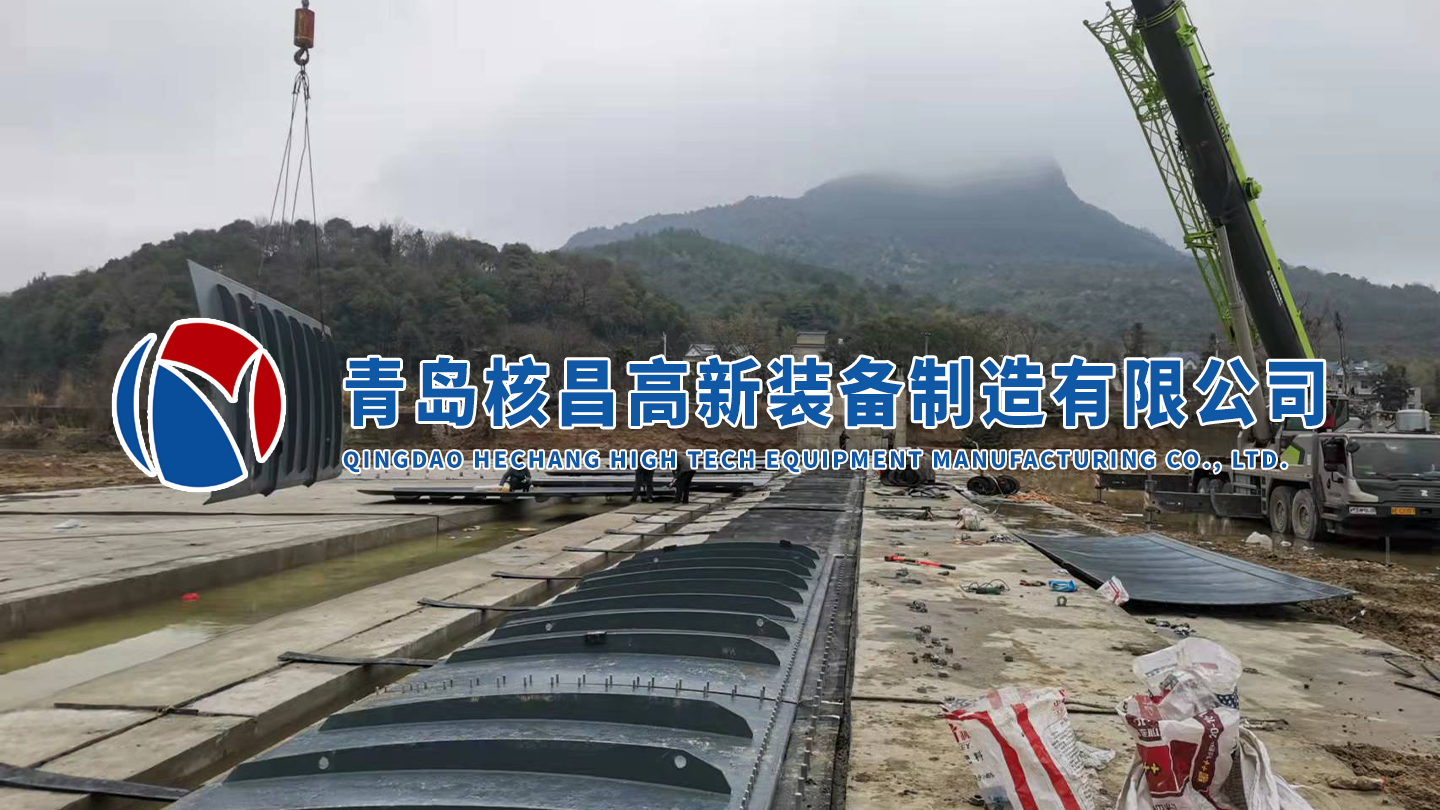
 As an innovative movable dam, the shield rubber dam has attracted considerable attention for its modular and integrated characteristics in the construction and installation process. In general, compared with the complex concrete pouring and metal structure installation of traditional sluice dams, the shield rubber dam features lower construction complexity and a significantly shorter cycle. Usually, the main installation of a medium-sized project can be completed within several months.
Its construction process can be clearly divided into the following core stages:
This is the most critical and time-consuming link, but it has been greatly simplified compared with traditional dam types. The main work is to pour a flat and solid reinforced concrete base slab. This base slab serves as the riverbed, dam support foundation and installation platform simultaneously, requiring high levelness and precision. The construction period of this stage is greatly affected by seasons, weather and geological conditions.
This is the core link reflecting the installation advantages of the shield rubber dam. All core components—high-strength alloy shield plates, pressure-resistant airbags, air supply and exhaust pipelines, and anchoring systems—are produced in a standardized manner in the factory and undergo pre-assembly testing. After being delivered to the site, like "building blocks", lifting equipment is used to sequentially lay the shield plate units on the base slab and connect them accurately, while placing the airbags under the shield plates. This modular installation method is less affected by weather and extremely fast; the mechanical installation of one dam section can usually be completed within a few days.
Install control systems (such as air compressors, hydraulic systems, and intelligent control cabinets), sensors (pressure, water level), and connect all pipelines. Subsequently, joint commissioning is carried out to test the lifting movement, speed, sealing performance of the dam, and the automatic control function linked with the upstream water level. Due to its high degree of automation, commissioning is more centralized and convenient compared with traditional sluice gates.
For a medium-sized shield rubber dam (e.g., dam length of 50-100 meters), the entire construction period from the start of foundation construction to the completion of commissioning is usually 3 to 8 months, depending on the scale and geological conditions. Its core advantages are: 1. Simple civil engineering structure, no need to build tall sluice piers and complex hoisting frames; 2. Factory production ensures controllable quality and low on-site installation risks; 3. Parallel operations allow simultaneous equipment production during foundation curing, effectively shortening the total construction period. Therefore, for river regulation projects pursuing short construction periods, low on-site interference, and easy later maintenance, the shield rubber dam demonstrates significant competitiveness in construction and installation.