

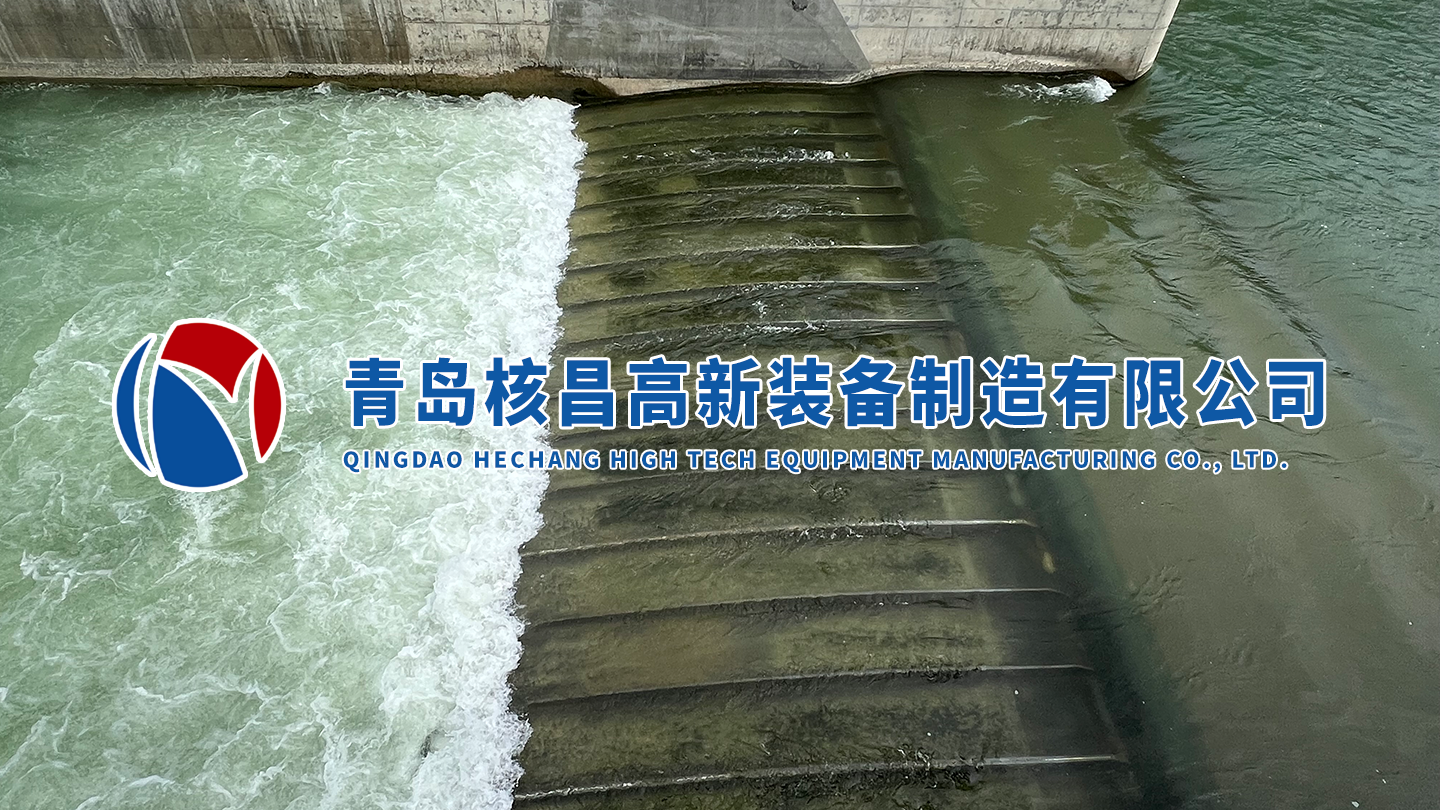
 Every spring, concentrated heavy rainfall, coupled with snowmelt and increased runoff, tends to trigger a sharp rise in river water levels, leading to a sudden surge in regional flood control and drainage pressure. This places extremely high requirements on the response speed, operational efficiency and safety of water conservancy regulation facilities. During this critical flood preparedness stage, the Shield Rubber Dam demonstrates significant multi-dimensional and structural advantages compared with traditional steel gates and concrete gates, making it a modern water conservancy facility option to enhance regional flood control and drainage efficiency.
The opening and closing of traditional gates rely heavily on heavy mechanical structures such as electric motors, screw rods and winches, featuring a long operation chain and cumbersome mechanical transmission links. It usually takes more than half an hour to complete a full opening or closing action, resulting in obvious lag when dealing with sudden floods, which makes it difficult to meet the rapid drainage demands posed by short-term heavy rainfall and sudden flood emergencies in spring.
In contrast, the Shield Rubber Dam realizes dam lifting and deflection by adjusting the air pressure inside the internal rubber bladder, eliminating complex heavy mechanical transmission. The entire dam deflection and flood discharge process can be completed within a few minutes, almost achieving "one-click flattening". When confronted with sudden floods caused by severe convective weather in spring, it can quickly restore the full-section flood discharge capacity of the river channel, minimize the flood discharge response time, and gain valuable emergency time for upstream rush drainage of waterlogging and urban waterlogging prevention. It is regarded as a "rapid response tool" for tackling sudden spring floods.
Even when fully open, fixed structures of traditional gates such as gate slots, piers and gate frames still occupy the river flow space, forming rigid barriers to water flow. This not only easily causes local backwater, but also traps a large amount of floating debris carried by floods. As vegetation revives in spring, floods carry more debris such as branches, weeds and fallen leaves, making traditional gates highly prone to blockage, which further aggravates flood discharge pressure and even causes abnormal rises in river water levels.
When deflected, the shield plate of the Shield Rubber Dam can lie completely flat and fit the riverbed, forming a smooth, continuous flow surface without raised barriers. Its hydraulic conditions are close to those of a natural river channel, with greatly reduced flow resistance, which can smoothly guide all kinds of floating debris carried by spring floods to discharge downstream, reducing the risk of river blockage at the source. In addition, the Shield Rubber Dam is equipped with a passive safety mechanism. In extreme situations such as over-standard floods, sudden power outages and equipment failures, it can trigger automatic dam deflection without manual operation, adding an extra reliable safety line and comprehensively improving operational safety during spring flood drainage.
The regulation mode of traditional gates is relatively extensive, most of which only support full opening, full closing or a few fixed opening degrees, failing to achieve precise adjustment according to real-time water levels and inflow volumes. It is difficult to balance drainage and water storage, which easily leads to problems such as water resource loss due to excessive drainage, or aggravated waterlogging caused by excessive water storage.
The Shield Rubber Dam can achieve stepless and precise adjustment of dam height through accurate control of air pressure in the rubber bladder, just like a controllable "water resource tap". Managers can flexibly fine-tune the dam height and precisely control the discharge flow based on real-time upstream inflow, river water level, spring agricultural irrigation needs and river ecological water replenishment requirements. It can not only meet the core demands of flood drainage and flow safety guarantee in a timely manner, but also rationally store precious water resources, achieving a dynamically optimal balance between flood control and disaster reduction, agricultural benefit and ecological water replenishment, and adapting to the multiple demands of spring water resource regulation.
Under the special and severe flood control challenge of spring drainage, the Shield Rubber Dam surpasses traditional gates in all aspects by virtue of its integrated advantages of rapid emergency response, unobstructed flow and precise intelligent regulation. It not only significantly improves the efficiency of drainage operations, but also demonstrates the core value of modern water conservancy facilities in terms of operational safety, climate adaptability and sustainable utilization of water resources, representing the modern development direction of river hydrological management and flood control and drainage.