

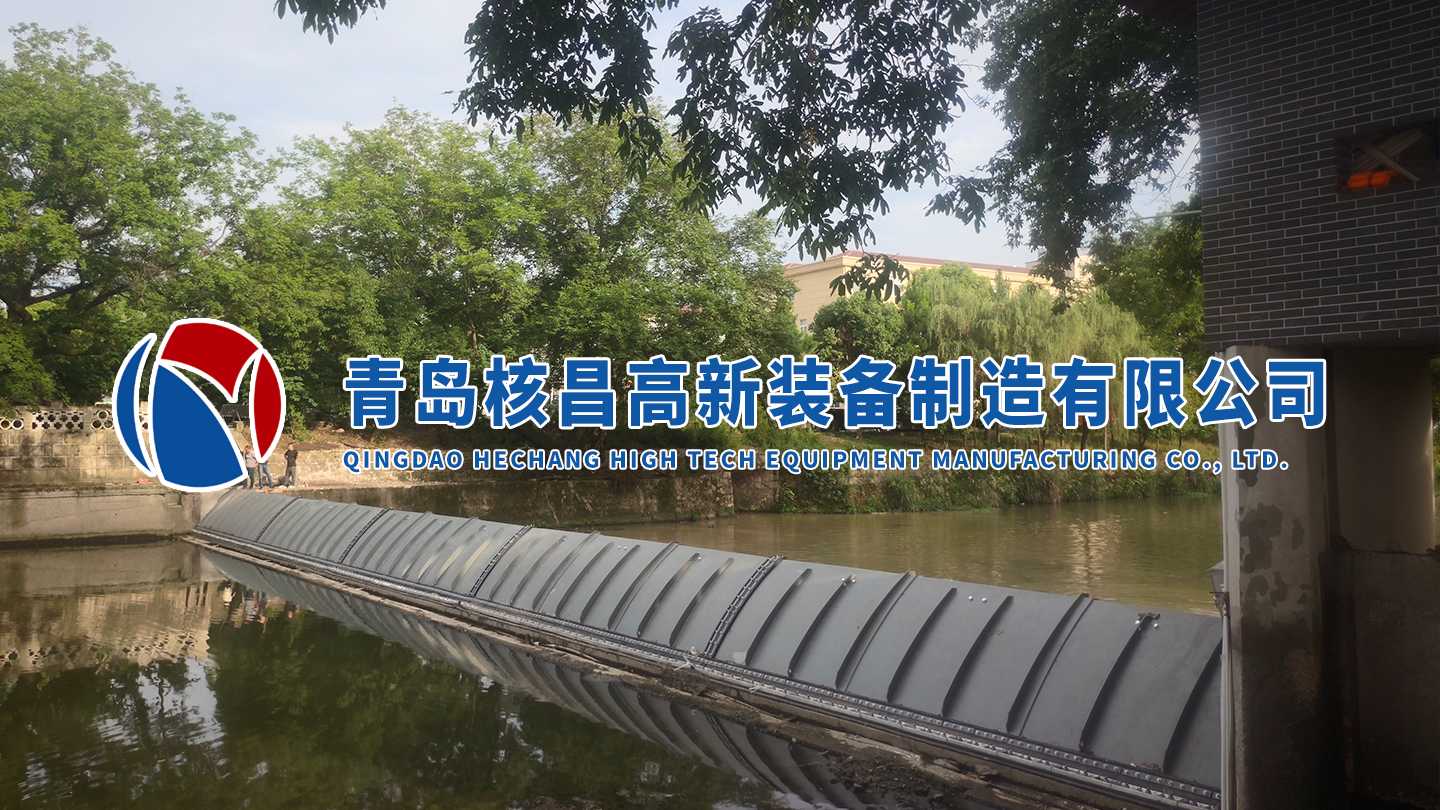
 In the field of water conservancy barrage engineering, safety performance is the core indicator for evaluating barrage quality. Compared with traditional rubber dams, Shield Rubber Dam adopts a comprehensive and systematic safety design to achieve a 15-fold higher safety factor, greatly upgrading the safety standards of flexible water-retaining barrages. This core advantage is not a simple superposition of individual technologies, but a multi-level safety guarantee system built upon structural protection, flood discharge response and ecological protection. It thoroughly solves the operational pain points of traditional barrages and has become a preferred solution for modern water conservancy projects.
Traditional rubber dams entirely rely on inflated flexible bags to bear water-retaining loads, resulting in weak structural resistance. During river flood seasons, the dam bags are highly susceptible to damage, tearing and leakage when subjected to high-speed impacts and friction from floating debris, sharp gravel and rolling rocks, seriously endangering barrage safety and operational stability.
Shield Rubber Dam features an innovative composite structure of steel shield plate for water retention and airbag for support, which revolutionizes the barrage protection capability. The outer steel shield plate directly withstands water flow and debris impacts. With high strength, excellent wear resistance and puncture resistance, it effectively defends against water erosion, gravel impacts and debris friction, isolating all external destructive forces. The rear airbag only undertakes auxiliary support and dam height adjustment, and is fully protected by the steel shield plate with almost no risk of external damage. Even under complex river conditions with high sediment content and abundant floating debris, the barrage can maintain long-term stable operation, fundamentally eliminating the defects of traditional rubber dams such as vulnerability to damage and poor erosion resistance.
Extreme rainstorms and sudden floods are major threats to water conservancy barrages. Rapid flood discharge capacity is critical for avoiding river waterlogging and preventing barrage failure. Traditional water-retaining barrages feature cumbersome lifting and lowering procedures with delayed responses, failing to adapt to emergency flood conditions and easily aggravating upstream water accumulation and inundation risks.
Equipped with an efficient pneumatic control system, Shield Rubber Dam delivers highly sensitive emergency response, with the entire process of inflation for dam raising and deflation for dam lowering completed in only 3 to 5 minutes. In the event of extreme rainstorms and over-standard floods, the dam can fully lower in a short time, instantly restoring the complete river flood cross-section to maximize flood discharge efficiency and accelerate river drainage. This ultra-fast flood control response mechanism effectively reduces waterlogging risks in upstream urban areas, farmlands and ecological zones, gains precious time for flood prevention and rescue, and consolidates the safety barrier for river flood seasons.
For environmentally sensitive water conservancy projects such as drinking water source areas, ecological reserves and landscape rivers, the ecological safety of barrage operation is equally important to flood control safety. Traditional hydraulically driven barrages take hydraulic oil as the power medium. Long-term operation may cause pipeline aging and seal failure, leading to hydraulic oil leakage, water pollution and ecological damage, posing prominent environmental hazards.
Shield Rubber Dam adopts pure compressed air as power drive, requiring no hydraulic oil or chemical media. It realizes zero pollution, zero leakage and zero oil contamination throughout operation. Fundamentally eliminating the risk of water body pollution, it is perfectly applicable to various ecologically sensitive and strictly water-quality-controlled water conservancy scenarios, achieving an organic unity of flood control safety and water ecological protection with both engineering practicality and ecological compatibility.
The 15-fold ultra-high safety factor of Shield Rubber Dam is not a single structural performance advantage, but a systematic achievement of the trinity of rigid structural protection, rapid flood discharge response and pollution-free ecological operation. Through comprehensive optimization of structural design, control logic and operation mode, Shield Rubber Dam completely makes up for the various shortcomings of traditional rubber dams, constructing a stable, reliable, long-term and environmentally friendly full-range safety operation system. Therefore, it has become a highly recognized core water-retaining facility in modern smart and ecological water conservancy projects.