

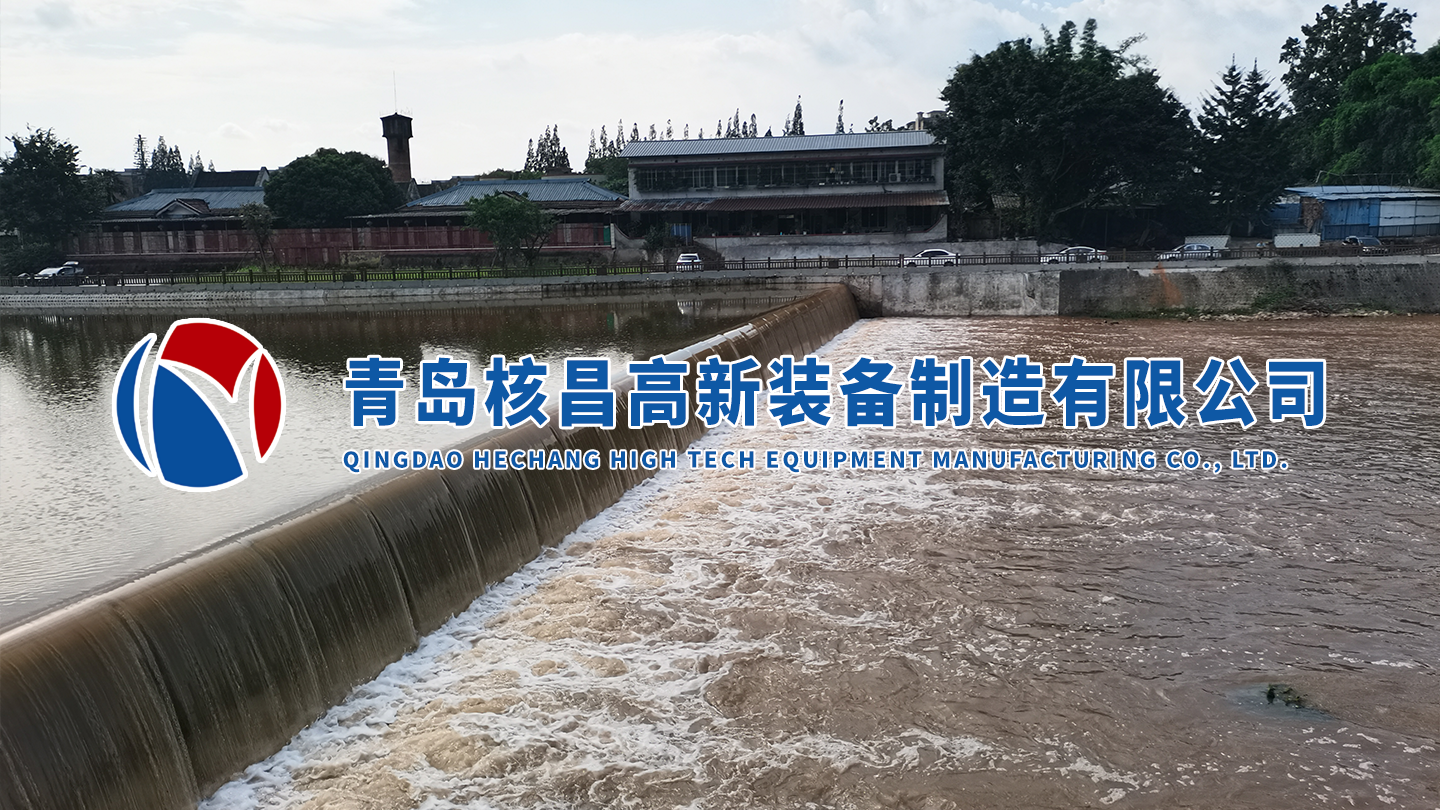
 Water conservancy construction in river courses during rainy seasons has always been a key and difficult point in engineering projects. Traditional construction methods are plagued by the common dilemma of "construction halts once water rises, resulting in project delays". The conventional full-section cofferdam construction process is highly susceptible to rainfall, river water level rise, and flood impacts during flood seasons, which greatly reduces effective working days, delays construction progress and leads to schedule out-of-control. Meanwhile, it increases cost pressures caused by flood prevention emergency works and rework. To overcome the pain points of water-related construction in rainy seasons, the project adopts an innovative segmented installation method for Shield Rubber Dams. Adopting a new construction mode of "constructing while storing water", it effectively solves the difficulties of rush construction in rainy seasons and ensures high-quality and efficient project advancement.
Breaking the inherent logic of integral construction and unified water storage after completion, the project innovatively implements the construction concept of "decentralizing the whole and implementing segmented management". The entire Shield Rubber Dam is divided into multiple independent construction and installation units along the longitudinal river course, with segmented construction, forming and commissioning. Upon the completion of the airbag and shield plate installation of each dam section, inflation and forming are carried out immediately, enabling the dam section to rapidly realize water retaining and storage functions and be put into flood control and water storage in advance. Relying on the water retaining and enclosure advantages of completed dam sections, water interference is isolated for upstream pending construction sections, maintaining stable dry working conditions. A virtuous dynamic construction cycle of "installing one section, storing water in one section, and advancing one section" is formed, realizing complete synchronization and zero interference between water storage and construction.
The construction sequence is optimized to prioritize the installation of the first Shield Rubber Dam section in the downstream river course. Key procedures including component alignment, sealing installation and inflation pressure testing are strictly controlled to ensure compliance with dam installation standards. After the completion and inflation of the first dam section, a local water storage reservoir is rapidly formed, which effectively intercepts incoming river water, prevents downstream water backflow, creates a dry and safe construction space for the upstream area, and lays a solid foundation for the overall project construction.
Based on the formed downstream water storage reservoir, the river water level is dynamically regulated, and the standardized installation of airbags and metal shield plates of the Shield Rubber Dam is carried out section by section from downstream to upstream. Each newly completed dam section is incorporated into the overall water retaining and storage system to continuously expand the water retaining range and stabilize the water level of the construction area, keeping the working surface under anhydrous or shallow water conditions at all times. This fundamentally solves the core problem of construction surface inundation caused by river water rise in rainy seasons.
Giving full play to the flexible and adjustable structural advantages of Shield Rubber Dams, the water retaining height of the dam is dynamically and accurately controlled by intelligently adjusting the inflation pressure of airbags. In response to extreme working conditions such as sudden rainfall and instantaneous flood peaks in rainy seasons, the dam can rapidly release pressure and adjust its state to allow smooth flood discharge. This effectively avoids risks such as working surface inundation, equipment damage and construction interruption, and greatly improves the adaptability and safety of construction in rainy seasons.
Compared with the traditional cofferdam construction technology, the innovative segmented installation and synchronous water storage & construction mode has remarkable advantages. This process eliminates the need for large-scale integral cofferdam erection, reducing human, material and financial resources invested in cofferdam erection, demolition and forced drainage, thus effectively saving construction costs. In addition, it completely breaks the limitations of rainy season construction, increasing the effective working days in rainy seasons by more than 30% and greatly shortening the overall construction period. In terms of safety guarantee, the segmented water retaining mode disperses flood impact loads and avoids the risk of overall dam failure. Even if a single dam section encounters temporary working condition problems, the remaining sections can still perform normal water retaining and storage functions, significantly improving the overall flood prevention safety coefficient of the project.
"Constructing while storing water" is not a simple process optimization, but an all-round reconstruction of the construction logic for river water-related projects in rainy seasons. The segmented installation technology for Shield Rubber Dams transforms the traditional passive water-avoiding construction mode into an active water-controlling and scientific construction mode. It effectively solves the industry pain points of difficult rush construction, high safety risks and high consumption in water conservancy projects during rainy seasons. It provides a low-cost, high-efficiency and high-safety construction path for similar river regulation, gate dam construction and other water-related projects, with high popularization and application value.